

Saturday Morning, Seven Families, No Explanations
Every parenting book says to reach out for help. Call the pediatrician. Get on the waitlist. Request the evaluation. Follow the system. For parents raising kids with ADHD, autism, sensory processing differences, or dyslexia, that advice can feel like being told to knock on a door that nobody answers.
So they stopped knocking. They started pulling chairs around a coffee table instead — building neurodivergent parent meetups that do what the formal system hasn’t managed to.
Across the country, parents of neurodivergent kids are creating regular, low-pressure, in-person spaces where you can sit down with someone who already knows what your Tuesday morning looks like. Not therapy. Not a webinar. Not a Facebook group where you type into the void at 1 a.m. An actual table, actual coffee, and another parent who doesn’t need the backstory.
This isn’t a trend piece about how community is nice to have. It’s about what happens when community becomes the infrastructure, because the infrastructure meant to hold your family isn’t there yet.
When the System Is Slow, Neurodivergent Parent Meetups Fill the Gap
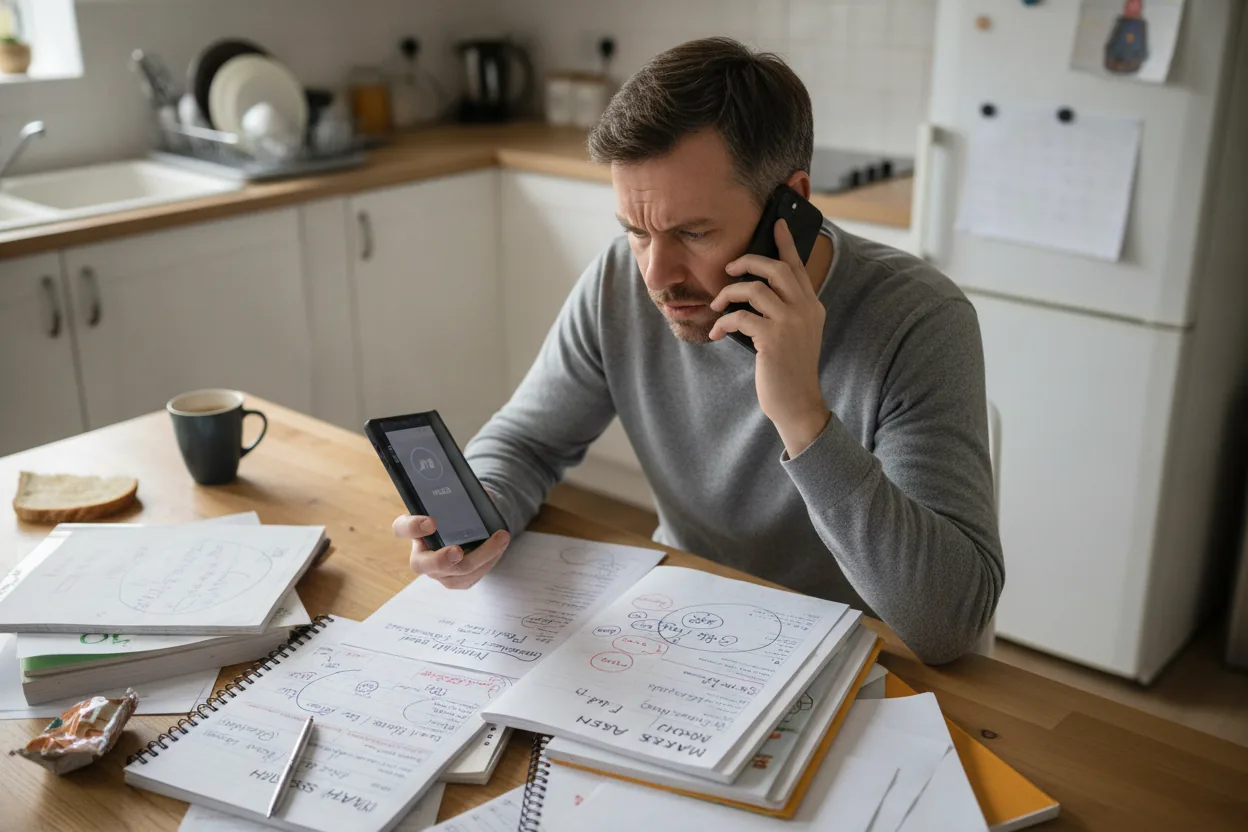
Here’s what it actually looks like when you just got a diagnosis and start making calls. The average wait for a comprehensive autism evaluation in the United States ranges from six months to over two years, depending on the state and the provider. ADHD assessments are faster but still backlogged in many regions. School-based evaluations for dyslexia or processing differences carry their own bureaucratic weight and timeline.
While you wait, your kid still needs support. You still need to figure out bedtime, meltdowns at pickup, the overwhelming cafeteria, and the homework battle that makes everyone in the house feel terrible. The gap between “your child qualifies for services” and “your child is actually receiving services” can stretch for months or years.
That gap is where parent-led community has moved in.
Regional café series, informal coffee meetups, and local family groups have become recurring support spaces in dozens of cities and towns. Some are linked to clinics or nonprofits, but many are started by a parent who posts in a local group: “Anyone want to meet at the park on Saturday? Sensory-friendly. No judgment. Bring your kid exactly as they are.”
The response is almost always immediate and overwhelming.
A dad in rural Vermont described it this way: “There’s no autism parent group within an hour of us. So I put a flyer up at the general store and the library. Four families showed up the first week. Now we meet every other Sunday at the fire station and there are eleven of us. One couple drives forty minutes. That tells you something about how much people need this.”
Why a Coffee Circle Works When a Clinic Can’t

A neurodevelopmental clinic appointment lasts 45 minutes if you’re lucky. You spend 15 of those recounting history. The clinician offers a recommendation. You leave with a packet and a follow-up in three months. This is not a criticism of clinicians. It’s a description of a system built for throughput, not for the kind of support that changes how you feel on a Wednesday afternoon when your autistic seven-year-old has been sent home from school again.
What neurodivergent parent meetups offer is something structurally different. They provide what researchers call “practical peer support” — the exchange of strategies, resources, and lived experience rather than clinical guidance. In these groups, you consistently hear the same two things named as the biggest benefits: feeling less alone and gaining confidence in daily decisions. Both rank above receiving specific clinical information.
When a parent of a kid with ADHD sits across from another parent of a kid with ADHD and says, “We switched to putting his shoes by the door instead of in his room and it cut our morning meltdown in half,” that’s not a therapeutic intervention. But it is useful in a way that the phrase “establish consistent routines” on a handout never manages to be.
The specificity matters. In these spaces, you’re not getting advice filtered through a professional lens. You’re getting the unpolished version: what actually worked, what made things worse, which occupational therapist returned calls on the first try, which teacher was willing to try flexible seating without requiring a formal accommodation letter.
A mom in Houston whose daughter has dyslexia and an auditory processing disorder put it bluntly: “I spent a year feeling like I was the only parent fighting for reading support that wasn’t just ‘try harder at home.’ Then I found a meetup through our library. Within twenty minutes, another mom had given me the name of an advocate, a specific reading program that had worked for her son, and permission to stop blaming myself. I couldn’t get any of that from our school team.”
The Nervous System in the Room Isn’t Just the Child’s

Here’s something that doesn’t get said enough in parenting spaces: your nervous system is part of the equation. Not in a blame-the-parent way. In a biological, measurable, well-documented way.
Research on co-regulation — the process by which one person’s regulated nervous system helps calm another person’s dysregulated one — has shown that a parent’s physiological state directly influences their child’s ability to return to baseline after stress. A 2022 study published in *Development and Psychopathology* found that parental stress reactivity predicted children’s cortisol recovery patterns, particularly in children with ADHD and anxiety profiles.
Translation: when you are running on fumes, white-knuckling through every transition, and haven’t had a single conversation with another adult who understands your situation, your nervous system is louder than your words. Your kid picks that up. Not because you’re failing. Because co-regulation is biology, and biology doesn’t care about your intentions.
Some meetup communities have started naming this directly. They frame support for the parent not as a luxury or an afterthought but as a functional part of the child’s support network. When you walk into a coffee circle, sit down, and exhale for the first time in a week, that exhale is doing something. It’s resetting a baseline. It’s making it marginally more possible for you to stay regulated during the next hard moment at home.
One mom in a Midwest circle for families of kids with sensory processing differences described it this way: “I didn’t realize how tight my shoulders were until I sat with other parents who got it. I cried in the parking lot after the first meetup. Not because it was sad. Because I’d been holding everything alone for so long that having someone nod and say ‘yeah, that’s hard’ just broke the seal.”
What a Sensory-Friendly Meetup Actually Looks Like
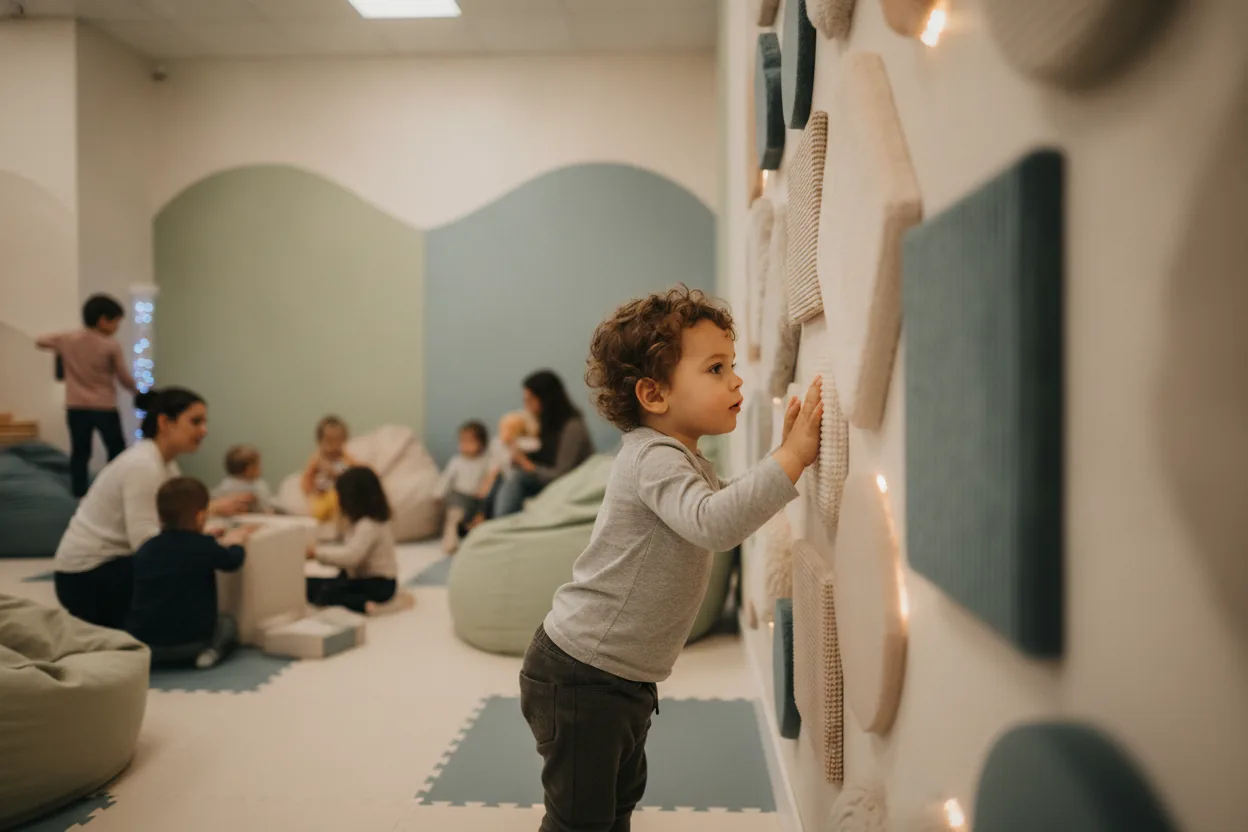
The phrase “sensory-friendly” gets used loosely, so let’s be specific.
A sensory-friendly family meetup means the environment has been intentionally set up to reduce the triggers that make public spaces hard for kids with autism, sensory processing differences, or ADHD. This might mean lower lighting, reduced background noise, a designated quiet space, fewer people, and clear expectations about what will happen and when.
Museums and cultural institutions have started offering calm-hours and access mornings specifically for neurodivergent families. The Autism Society and similar organizations coordinate sensory-friendly family nights at movie theaters, bowling alleys, and community centers. These events matter because they let families participate in ordinary public life without the constant mental calculation of “will this be too much for my kid?”
But the parent-led versions often look simpler. A meetup at a park with a shaded area and a plan to leave whenever anyone needs to. A coffee morning at someone’s house where the kids can stim, flap, spin, or retreat to a quiet room without anyone raising an eyebrow. A standing Saturday hangout at a community center where the fluorescent lights have been swapped for lamps and someone always brings noise-canceling headphones in case a kid forgot theirs.
The design principle is the same in every case: belonging shouldn’t require your child to mask, perform, or hold it together. And you shouldn’t have to spend the whole time managing, apologizing, or explaining.
The Moment: Saturday Morning at the Park
Here’s what this looks like in a body, not just in theory.
It’s 10 a.m. on a Saturday. A mom arrives at a park shelter with her eight-year-old son, who has ADHD and a sensory profile that makes crowded spaces feel like an assault. He’s already escalating. The parking lot was full. There were dogs barking. He wanted to stay in the car.
In his nervous system, the sympathetic branch is firing. His heart rate is up. His ability to process language is narrowing. He’s not being difficult. He’s flooded.
In her nervous system, the familiar cascade: cortisol spiking, chest tightening, the internal monologue of “we should just go home, this was a mistake, why did I think we could do this.” She’s scanning the other families arriving, bracing for the looks.
But this is a neurodivergent family meetup. The organizer, another parent, has texted ahead: “Low-key today. Seven families. The shelter is away from the main playground. There’s a trail if anyone needs to walk it off.”
The mom sits on the bench. Her son stands behind her, one hand on her shoulder, watching. Nobody approaches him. Nobody tells him to go play. Another kid is lying face-down in the grass nearby, and that kid’s dad is sitting next to him, scrolling his phone, unbothered.
After fifteen minutes, her son walks to the edge of the group. After thirty, he’s throwing rocks into a puddle with two other kids, none of them talking, all of them comfortable.
Meanwhile, the mom is sitting with three other parents. One says, “Our OT suggested a weighted lap pad for car rides and it actually helped with the parking lot thing.” Another says, “We just stopped going to birthday parties. I felt guilty for a year and then I stopped feeling guilty.” The third says, “Same.”
That’s it. That’s the intervention. Proximity to people who don’t need the explanation.
The co-regulation move happened before anyone said a word. It happened when she arrived and saw that the space was designed for her kid, not despite her kid. Her shoulders dropped. Her breathing slowed. Her son, still touching her shoulder, felt the shift.
If you want exact words to try, here are the ones that work in these spaces, parent to parent: “You don’t have to explain. I get it.” And to the child: “You can stay right here with me as long as you need. There’s no rush.”
Neuro-Affirming Spaces Are Built, Not Found
A 2026 paper introducing the REBEL Framework for neurodivergent support emphasizes that neuro-affirming environments need to be actively co-created across home, school, community, and services. The framework positions genuine acceptance and belonging as foundational, not aspirational. This matters because it reframes the work: the goal isn’t to prepare a neurodivergent child to survive non-affirming spaces. The goal is to build spaces that don’t require survival mode.
Parent-led meetups and family groups are doing this work on the ground, often without formal training or institutional backing. They’re creating the micro-environments where a kid with dyslexia doesn’t have to read aloud to participate, where a kid with autism can wear headphones without being asked why, where you can say “I yelled this morning and I feel terrible” and nobody offers a parenting book in response.
A single dad in Phoenix whose ten-year-old son is autistic and has a PDA profile described his meetup group as “the only place where I don’t have to perform competence. Every other room I walk into — the school, the clinic, even family dinners — I feel like I’m being evaluated. At Saturday coffee, I can say ‘I have no idea what I’m doing’ and three other people say ‘same’ and then someone tells me something that actually helps.”
This is not a replacement for clinical care, therapy, or school-based services. But it is filling a role that none of those systems are designed to fill: ongoing, reciprocal, judgment-free connection between people who share a daily reality.
One Thing to Do Tomorrow
Find one local group. Search your city or county name plus “neurodivergent family meetup” or “ADHD parent coffee” or “autism family group.” Check Facebook groups, your library’s community board, or your pediatrician’s office. If nothing exists, consider posting: “Any parents of neurodivergent kids want to meet for coffee this Saturday? No agenda. Just company.”
You don’t need to organize a nonprofit. You don’t need a curriculum or a guest speaker. You need a table, a time, and the willingness to say, out loud, “This is hard and I don’t want to do it alone.”
The waitlist will still be there on Monday. The IEP meeting will still be scheduled for a date that feels too far away. But on Saturday morning, you could be sitting across from someone who knows exactly why you’re tired, and that knowing might be the thing that gets you through the next week.
That’s not a small thing. For a lot of families right now, it’s the biggest thing available.