
The Room Is Too Loud for Friendship to Work
She’s standing at the kitchen counter, texting another parent back. The message says, “We’d love to have Kai over! We’re thinking Chuck E. Cheese, Saturday at noon, there’ll be about eight kids.” She puts the phone down. She already knows how this ends. Forty-five minutes of fluorescent lights, shrieking, an arcade floor sticky with soda, and her seven-year-old autistic son pressed into a corner booth with his hands over his ears, while the other kids sprint between games. By the time they get home, he won’t speak for two hours. Everyone will call it a meltdown. She’ll call it what it is: a setup.
(Kai is a composite — drawn from several families, not one child’s story.)
This is the article for the parent standing in that kitchen. The one who’s been told her kid needs more socialization, more practice, more exposure. The one who suspects the advice is wrong but hasn’t yet found the language for why.
Social access, not social skills deficit
The advice she’s been getting has a name and a logic behind it, and it’s worth understanding why it keeps failing.
The dominant model for helping neurodivergent kids socialize has been remediation. The assumption: the child is missing skills. If we drill greeting scripts, practice eye contact, run them through enough social skills groups, they’ll eventually perform friendship the way their non-disabled peers do.
This framing has deep roots. Applied behavior analysis (ABA) programs and many school-based social skills curricula were built on observable behavior change as the metric of success. If the child makes eye contact, initiates conversation, and tolerates a noisy room, the intervention “worked.” What it often produced instead was masking — the learned suppression of natural responses in order to appear typical.
A growing body of clinical guidance and parent-led advocacy now frames social life as an access issue. The child doesn’t lack the desire or capacity for connection. The environment is simply too loud, too unpredictable, too loaded with unspoken rules for connection to happen. When you change the container, the connection appears on its own.
This isn’t just theory. Dr. Megan Anna Neff, a clinical psychologist who is herself autistic, has written extensively about how sensory environments gate social capacity. When sensory load is high, the nervous system prioritizes survival processing. Higher-order social cognition — the kind that lets you read a room, track a conversation, respond flexibly — gets deprioritized. It’s not a skills gap. It’s a bandwidth problem.
Where the “more exposure” myth came from
The idea that kids need repeated exposure to uncomfortable social situations to build tolerance borrows from anxiety treatment models, specifically graduated exposure therapy. In clinical anxiety treatment, exposure works because the feared outcome (the dog bites, the elevator gets stuck) doesn’t actually happen, and the brain updates its threat model.
But for many kids with autism or sensory processing differences, the feared outcome does happen. The room is too loud. The lights do hurt. The unpredictable behavior of seven other kids does overwhelm their system. There is no false alarm to correct. The threat is real, and every exposure confirms it.
A 2020 review in the journal *Autism* (Hull et al., [“Putting on My Best Normal”](https://doi.org/10.1177/1362361319864995)) found that autistic people who engaged in sustained social camouflaging reported higher rates of anxiety, depression, and suicidal ideation over time. The cost of performing like your typical peers is not neutral. It accumulates.
This doesn’t mean avoiding all social contact. It means the “social skills deficit” framing put the burden of change on the child’s neurology instead of on the environment. And when parents internalize it, they push kids into settings that guarantee failure — not because the parent is cruel, but because they were told this was the path to friendship.
The sensory gate nobody talks about
Here’s the mechanism that changes everything once you see it.
Social interaction is not one cognitive task. It’s several running simultaneously. You’re processing auditory input (what someone is saying), visual input (their facial expression, body language), proprioceptive input (where your body is in space relative to theirs), and interoceptive input (how you feel right now). You’re also inhibiting irrelevant stimuli — the TV in the background, the texture of the chair, the smell of someone’s lunch.
For a child with sensory processing differences, this filtering system works differently. Research from the STAR Institute and others has shown that sensory over-responsivity can cause the brain to treat background stimuli as foreground threats.
The hum of a refrigerator that a typical child ignores entirely may register for a sensory-sensitive child at the same priority level as the friend talking to them. The seam of a sock. The flicker of a fluorescent bulb. These aren’t minor annoyances — they’re signals the nervous system is classifying as urgent.
Now add a birthday party. Music, balloons popping, six conversations at once, unfamiliar food smells, a parent they don’t know well crouching down to make forced eye contact. The child’s sensory system is allocating nearly all available processing power to managing input. There’s almost nothing left for the actual social part.
This is why the social “skills” were never really missing. They were buried under a processing load that would tank anyone’s social performance. Reduce the load and the child you see is different — not because they learned something new, but because they finally have the bandwidth to use what they already had.
This is also why some kids look “fine” at a party and then fall apart at home. They held it together by diverting every resource they had, and when the demand stopped, the system crashed. Parents describe this as the “aftershock” effect. It’s not bad behavior. It’s neurological debt coming due.
What a sensory-accessible playdate actually looks like
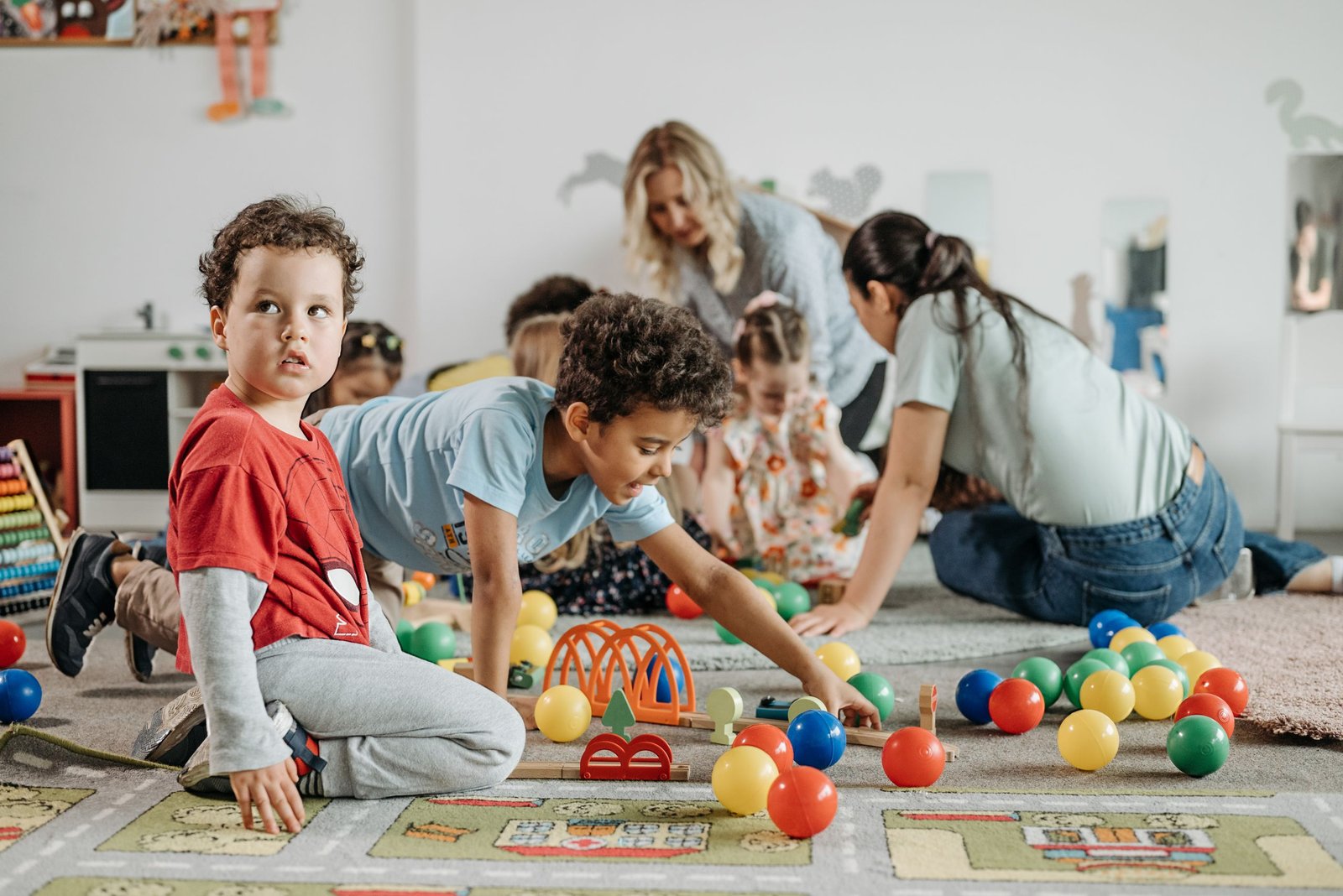
Forget the Pinterest playdate. Forget the idea that more kids equals more fun. For children with autism, ADHD, or sensory processing differences, the most successful social interactions share a few structural features that have nothing to do with social skill and everything to do with design.
One child at a time. Research and clinical guidance from organizations including the Child Mind Institute and the Autism Science Foundation consistently recommend one-on-one playdates as the starting format. One friend removes the chaos of group dynamics, the need to track multiple social threads, and the unpredictability of what seven-year-olds will do when they outnumber adults.
Shorter than you think. Sixty to ninety minutes is enough. Some families start with forty-five. The goal is to end while the interaction is still going well. A child who leaves a playdate feeling good will want to do it again. A child who stays until they’re overwhelmed will associate that friend with distress. You’re building a track record of success, not endurance.
Activity-based, not open-ended. “Just go play” is one of the highest-demand social instructions you can give a neurodivergent child. It requires them to figure out an activity, read the other child’s preferences, manage turn-taking without structure, and improvise. Instead, have the activity ready. Legos on the table. A baking project with measured ingredients. A card game they already know. The activity becomes the interaction. Conversation happens alongside it, not as the main event.
I’m calling her Reena. Her nine-year-old daughter has ADHD and sensory over-responsivity. Their first attempt at a structured playdate was a disaster — Reena invited a classmate over for baking, but she’d picked a recipe with too many steps, the kitchen timer kept going off, and her daughter ended up under the dining room table refusing to come out. The friend’s mom picked up early. Reena almost stopped trying.
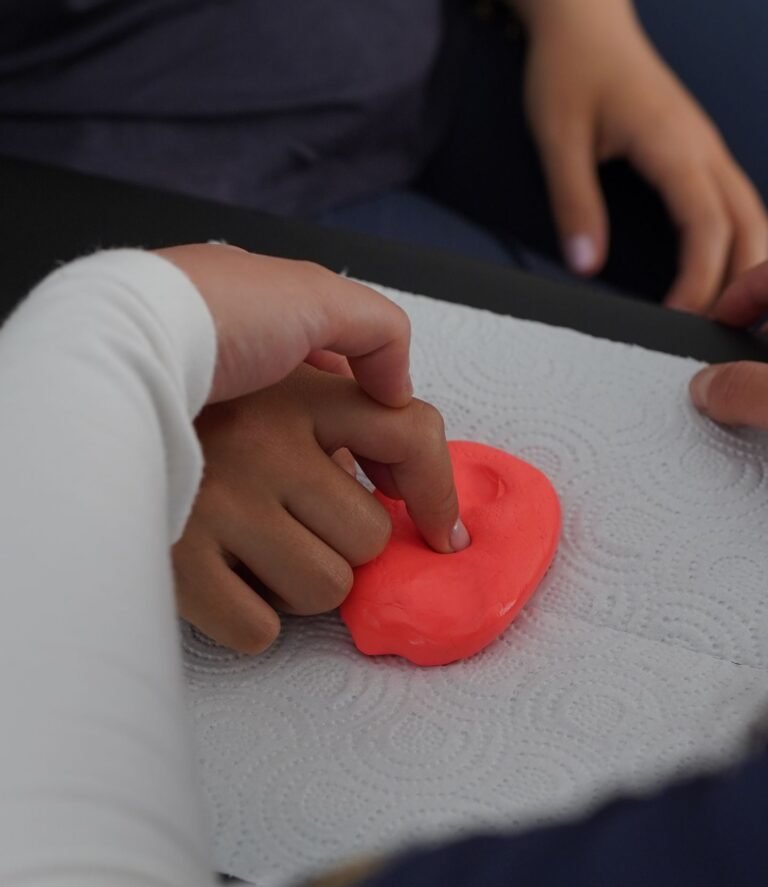
What she did instead was strip everything back. The next time, same friend, they made slime. One bowl, one set of ingredients, no timer. “The slime gave her something to focus on,” Reena told me. “She didn’t have to figure out what to do with another human for two hours. She just had to share the glitter glue.” That friend still comes over. They’ve graduated to two-ingredient cookies. The friendship is real, and it was built in forty-five-minute increments.
Then there’s Marcus, whose eight-year-old son Deshawn has sensory processing disorder but no autism diagnosis. Deshawn had been kicked out of two social skills groups — too physical, too loud, wouldn’t sit in the circle. Marcus started inviting one boy from the neighborhood to their backyard to dig in the mud pit Deshawn had already claimed as his territory. No structured activity at first — just two kids with shovels and a hose. Deshawn didn’t talk much, but he started handing the other boy tools. Then positioning his trucks so the other boy could reach them. Within a month, he was asking when “his friend” was coming back. The connection wasn’t verbal. It was spatial, physical, offered on Deshawn’s terms. It counted.
Direct language replaces hidden social rules
Typical social interaction runs on subtext. “Do you want to come play?” sometimes means “I want you to come play.” “I’m fine” sometimes means “I’m not fine.” “That’s interesting” sometimes means “I’m bored.” For kids with autism especially, this subtext is not intuitive. It’s a second language they’re expected to speak without instruction.
Parents and clinicians increasingly recommend direct, low-ambiguity language as an accessibility feature of friendship, not a social skills lesson. This means coaching both kids (when possible) to say what they mean. “I want to play Minecraft now” instead of hinting. “I need a break” instead of withdrawing silently and hoping the other child understands. “I don’t like that game” instead of going along and melting down later.
Some families prep their child before a playdate with specific phrases. Not scripts meant to perform normalcy, but genuine communication tools. “If you want to stop, you can say ‘I’m done with this, can we do something else?'” “If the noise bothers you, you can come to me and say ‘too loud.'” These are exit ramps built into the interaction itself, and they work because they reduce the cognitive load of figuring out what to say in real time.
Dr. Barry Prizant, author of *Uniquely Human*, has argued that most “social skill deficits” in autistic children are actually communication access problems. The child has social motivation and social interest. What they lack is a communication environment that matches their processing style. When the environment adapts, the “deficit” often disappears.
Parallel play is still connection
There is a persistent belief that real friendship requires face-to-face verbal exchange. Two kids sitting side by side, each building their own Lego set, occasionally glancing at each other’s work, might look to an adult like failed socialization. It’s not.
Parallel play — where children engage in the same activity near each other without direct interaction — is a legitimate and often preferred mode of connection for many autistic and sensory-sensitive kids. It allows shared experience without the demand of sustained conversation, eye contact, or emotional reciprocity on a neurotypical timeline.
A 2019 study published in the *Journal of Autism and Developmental Disorders* found that autistic children who engaged in structured parallel play showed lower cortisol levels and reported higher enjoyment than those in unstructured interactive play conditions. The stress was lower. The enjoyment was higher. By every measure that matters, the connection was more real, not less.
Parents in neurodivergent communities have started naming this explicitly. “My son’s best friend comes over and they play Minecraft in the same room on separate devices for two hours,” one father posted in a support forum. “They barely talk. When the friend leaves, my son says it was the best day ever. I’ve stopped questioning it.”
How to tell overload from avoidance
One of the hardest judgment calls a parent faces is distinguishing between a child who is genuinely overwhelmed and a child who is avoiding social interaction out of anxiety that could be gently stretched. The answer matters because the response is different.
Sensory overload has physiological markers. Look for changes in skin color (flushing, pallor), changes in breathing, covering ears or eyes, stimming that increases in intensity, loss of language or suddenly going quiet, and what occupational therapists call “the freeze” — a sudden stillness that looks like compliance but is actually a nervous system shutting down input.
Social anxiety, by contrast, often involves verbal worry beforehand (“What if they don’t like me?”), physical symptoms like stomachache that resolve once the decision is made not to go, and relief rather than shutdown when the situation is avoided.
For many neurodivergent kids, both are happening at the same time. The sensory environment creates the overload, and repeated overload creates the anxiety about future social situations. Addressing the sensory access problem often reduces the anxiety without any anxiety-specific intervention.
A practical test: if your child connects happily in a quiet, one-on-one, activity-based setting but falls apart at a loud group event, the variable isn’t their social capacity. It’s the environment. Adjust the environment before you adjust the child.
Building recovery into the plan
No article about sensory-friendly social design is complete without this: recovery is part of the plan, not a sign the plan failed.
Even well-designed playdates cost energy for sensory-sensitive kids. Social interaction requires processing, and processing requires resources. The families who sustain friendships over time are the ones who build recovery into the schedule. That means no playdate followed immediately by grocery shopping. No two social events in one day. A quiet hour after, with whatever the child finds regulating: headphones, a favorite show, a dark room, a weighted blanket.
Reena put it bluntly: “I used to schedule a playdate and then errands and then dinner out because I thought she needed to learn to handle a full day. She can’t. I can barely handle a full day. Now we do one thing and then nothing. She’s a completely different kid.”
This is not coddling. It is resource management. A child who recovers fully between social events has capacity for the next one. A child who never recovers accumulates a deficit that eventually looks like refusal, aggression, or withdrawal. The behavior people worry about is often the downstream effect of a schedule that never accounted for the child’s actual processing budget.
One thing worth trying this week
A lot of parents start with the one friend their kid already feels easy around. Invite that kid over for sixty minutes. Have one specific activity ready — something your child already enjoys and can do without instruction. Tell your child in advance exactly what will happen: who is coming, what you’ll do, how long it will last, and what happens after they leave. Set up a quiet space they can go to if they need a break. When the sixty minutes are up, end it. Even if it’s going well. Especially if it’s going well.
You’re not building a social skills curriculum. You’re building a pattern your child’s nervous system can trust. The friendship will grow from there — not because you forced it, but because you made a container where it was finally possible.